

The Endocannabinoid System: A Plain-Language 2026 Guide
Posted by Steve Schultheis on Apr 15th 2025
What Is the Endocannabinoid System? An Evergreen Guide
Last updated: April 22, 2026 · By Steve Schultheis, Founder — Steve's Goods
The endocannabinoid system — ECS for short — is one of the body's internal signaling networks. It was discovered in the 1990s during research into how THC produces its effects, and it has since been recognized as a broad regulatory system that the body uses to keep many of its own processes in balance. This guide describes the ECS as researchers currently understand it. It does not recommend cannabinoid products as a treatment for any condition, and it does not make claims about what hemp products do for the ECS. The science is still unfolding, and honest writing about it means being careful with language.
Table of contents
- What the ECS is
- The three parts of the system
- CB1 and CB2 receptors
- Endocannabinoids — the body's own signaling molecules
- The enzymes that build and break them down
- How plant cannabinoids fit in
- Where the research stands
- FAQ
What the ECS is
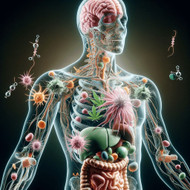
The endocannabinoid system is a signaling system built on three things: a set of receptors on cell surfaces, a set of signaling molecules the body produces to interact with those receptors, and a set of enzymes that build those signaling molecules on demand and break them down afterwards. It is present throughout the body — in the brain, the peripheral nervous system, the immune system, the gut, connective tissue, reproductive tissue and more.
It is sometimes described as a "homeostatic" system, meaning one of its roles appears to involve keeping other systems within their normal operating ranges. That framing is useful but should be read with care: the ECS is an object of ongoing research, and while many of its functions are established, much of the detail is still being mapped.
The three parts of the system
Most modern descriptions of the ECS group its components this way:
- Cannabinoid receptors. CB1 and CB2 are the two canonical receptors. They are part of the G-protein-coupled receptor family and are found on cell surfaces throughout the body.
- Endocannabinoids. Small lipid-based signaling molecules the body produces on demand to activate CB1 and CB2. The two best-characterized are anandamide (AEA) and 2-arachidonoylglycerol (2-AG).
- Metabolic enzymes. The proteins that build endocannabinoids when they are needed and break them down when they are not. FAAH and MAGL are the two most-studied.
CB1 and CB2 receptors
| Receptor | Primary location | Notes |
|---|---|---|
| CB1 | Brain and central nervous system; also peripheral tissues | Densely expressed in the brain. Direct binding by THC at CB1 is what produces the intoxicating experience associated with THC. |
| CB2 | Immune system and peripheral tissues | More involved in peripheral signaling. Agonism at CB2 does not produce the intoxication profile associated with CB1 activation. |
Both receptors inhibit cyclic AMP production when activated, with different downstream cascades depending on tissue type. This is the mechanism layer underneath many of the effects cannabinoids are studied for.
Endocannabinoids — the body's own signaling molecules
The body produces its own cannabinoid-like molecules. The two that have been studied most are anandamide (AEA) and 2-arachidonoylglycerol (2-AG). Unlike most neurotransmitters, they are synthesized on demand from membrane phospholipids rather than stored in vesicles — the body makes them when the signaling context calls for them and breaks them down immediately afterwards. That "made to order" pattern is one of the features that makes the ECS distinctive.
The enzymes that build and break them down
Two enzyme families dominate the catabolic side: fatty acid amide hydrolase (FAAH) breaks down anandamide, and monoacylglycerol lipase (MAGL) breaks down 2-AG. On the synthesis side, the enzymes are more varied and tissue-specific. This enzymatic architecture is one reason ECS signaling is local and transient rather than system-wide and persistent.
How plant cannabinoids fit in
Cannabinoids produced by the cannabis plant — phytocannabinoids, to distinguish them from the endocannabinoids the body makes — can interact with the same receptor system. They do so in different ways:
- THC binds directly to CB1 as an agonist. That direct binding is what produces the intoxication profile associated with delta-9 THC.
- CBD does not meaningfully activate CB1 at the doses used in hemp products. Its interaction with the ECS is more indirect — it is studied for effects on FAAH activity, on the way other molecules bind to CB1, and on non-cannabinoid receptor targets.
- CBN, CBG and other minor cannabinoids interact with CB1 and CB2 at varying affinities, and research on each is ongoing.
Nothing in this section describes what those interactions do for a person. That is a harder question, and the honest answer is that it depends on the cannabinoid, the dose, the individual, and a number of variables researchers are still working to characterize.
Where the research stands
The ECS is a real system — that part is not in dispute. It is involved in many processes the body regulates, and it is the mechanism through which THC produces its effects. Beyond that, we recommend caution with the strong claims that sometimes appear in hemp marketing. For a grounded view of the current research landscape, two resources:
- The National Institutes of Health (NIH) — the National Center for Complementary and Integrative Health publishes plain-language summaries of what is and isn't established.
- PubMed (pubmed.ncbi.nlm.nih.gov) — the primary-literature database. Searching "endocannabinoid system" returns a few thousand peer-reviewed studies; searching "endocannabinoid system review" narrows it to survey papers that are often more useful for a lay reader.
Steve's Goods is a hemp manufacturer, not a research institution. We describe what we can verify about our products — cannabinoid content, batch-level testing, processing method — and we leave claims about what those cannabinoids do for the human body to the researchers actually doing the work.
These statements have not been evaluated by the Food and Drug Administration. Steve's Goods hemp products are not intended to diagnose, treat, cure or prevent any disease.
Frequently asked questions
Is the endocannabinoid system real?
Yes. It was discovered during THC research in the early 1990s and is now a recognized part of human physiology.
Where is the ECS located in the body?
Throughout. CB1 receptors are concentrated in the brain and central nervous system; CB2 receptors are concentrated in the immune system and peripheral tissues. The signaling molecules and metabolic enzymes appear in many tissue types.
Do CBD and THC interact with the ECS the same way?
No. THC binds directly to CB1 as an agonist. CBD does not meaningfully activate CB1 at the doses used in hemp products.
Are "endocannabinoid deficiency" claims established science?
"Clinical endocannabinoid deficiency" is a published hypothesis that has been discussed in peer-reviewed literature. It is a hypothesis — interesting, debated, not established as medical consensus. Treat marketing that presents it as settled science with skepticism.
Is the ECS the same in other animals?
Most vertebrates have some version of an ECS. That is why pet-formulated hemp products exist — the underlying receptor system is conserved across mammals.
Should I take CBD or THC "to support" my ECS?
That is a framing question rather than a medical one, and we will not make a recommendation. If you have a specific health question, a licensed healthcare provider is the right person to ask. If you are a consumer researching the hemp category, the sections above are a starting point.