

Hemp Seed Oil vs CBD Oil: Key Differences Explained
Posted by Steve Schultheis on Apr 15th 2025
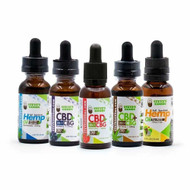
Hemp seed oil and CBD oil are two different products from the same plant. Hemp seed oil is a food oil cold-pressed from hemp seeds and carries no cannabinoids. CBD oil is an extract taken from leaves, flowers and stalks. Steve’s Goods publishes current COAs for its hemp products on its Lab Reports page.
Hemp Seed Oil vs. CBD Oil: What's Actually Different
Last updated: April 22, 2026 · By Steve Schultheis, Founder — Steve's Goods
They share a plant. They share a bottle format. They share, in some cases, a shelf. But hemp seed oil and CBD oil are two completely different products, and the confusion between the two is the single most common mistake we see shoppers make. Hemp seed oil is a food oil pressed from hemp seeds — nutritious, unglamorous, and cannabinoid-free. CBD oil is a cannabinoid extract derived from the leaves, flowers and stalks of the plant. Same plant, different parts, different products. Here's how to tell which one is actually in the bottle in front of you.
The short version
If the label says "hemp seed oil," it is a cold-pressed food oil with essentially no CBD. If the label says "CBD oil" or "hemp extract," it is a cannabinoid product that should be backed by a batch-matched Certificate of Analysis. The word "hemp" on a product does not by itself tell you which one you're holding.
Side-by-side comparison
| Hemp Seed Oil | CBD Oil | |
|---|---|---|
| Plant part used | Seeds | Flowers, leaves, stalks |
| Processing method | Cold mechanical pressing | CO₂ or ethanol extraction |
| CBD content | Negligible (effectively zero) | The main ingredient — typically 250–5,000 mg per bottle |
| THC content | Non-detect in properly cleaned seeds | Varies — non-detect (isolate) up to compliant trace (full-spectrum) |
| Primary value | Omega-3 and omega-6 fatty acids, protein, vitamin E | Cannabinoid content for wellness framing |
| Typical aisle | Grocery, cooking oils, supplements | Hemp/wellness retailer, tincture format |
| Price range (8 fl oz equivalent) | $8–$20 | $40–$150+ |
| Should have a COA? | Not required | Yes, batch-matched |
| Use in cooking | Yes — low-heat dressings, finishing oil | Not the primary use; many CBD oils include flavoring or carriers unsuitable for cooking |
Why the confusion exists
Three reasons. First, both products live under the word "hemp." Second, major retailers — especially online marketplaces — have historically allowed "hemp oil" as a catchall term, which obscures the distinction at the listing level. Third, some products deliberately ride the line: a cold-pressed seed oil marketed with cannabis-adjacent packaging and a "wellness" frame, priced as if it contained cannabinoids. That last category is why we insist that every Steve's Goods CBD product be batch-matched to a COA.
When each product makes sense
Hemp seed oil
Hemp seed oil is a legitimate food oil with a favorable omega-3 to omega-6 fatty acid ratio. It belongs in a kitchen, not a tincture drawer. Use it as a finishing oil on salads, whisk it into a dressing, or take it as a dietary supplement if you're specifically interested in its fatty acid profile. What it will not do: deliver any meaningful CBD.
CBD oil
CBD oil is a wellness product designed to deliver cannabinoids. It is typically taken sublingually (held under the tongue for about 60 seconds before swallowing) so that the cannabinoid content is absorbed directly. Good CBD oil will list CBD milligrams both per bottle and per serving, will carry a batch number that matches a third-party COA, and will disclose whether it is full-spectrum, broad-spectrum, or isolate. Our CBD Hemp Oil is a good starting example — full-spectrum, Kentucky-sourced, batch-tested.
How to verify what's actually in the bottle
- Look for a CBD milligram total. A real CBD oil will advertise CBD content prominently. A hemp seed oil will not.
- Look for a batch number and a COA. A CBD oil should link to a batch-matched Certificate of Analysis. A seed oil has no reason to.
- Check the ingredients panel. A seed oil ingredient list is usually a single line: "hemp seed oil." A CBD oil will name a carrier oil (MCT, olive, hemp seed) and a hemp extract or CBD isolate.
- Compare the price. A $12 "hemp oil" in a wellness bottle is almost certainly not a cannabinoid product.
Legal status
Both are federally legal in the United States. Hemp seed oil has been a legal food product for decades. CBD oil is legal under the 2018 Farm Bill when derived from compliant hemp (≤0.3% delta-9 THC, dry weight). Ingestible hemp products — a category under which CBD oil tinctures fall regardless of whether a consumer chooses to hold the dose sublingually before swallowing — come under H.R. 5371's finished-container total-THC ceiling of 0.4 mg. Hemp seed oil is unaffected because it contains no meaningful THC to begin with.
Frequently asked questions
Is hemp seed oil the same as CBD oil?
No. Hemp seed oil is a food oil pressed from seeds with essentially no CBD. CBD oil is a cannabinoid extract from the flowers and leaves.
Can I cook with CBD oil?
Not ideally. Most CBD oils are formulated for sublingual use and include flavoring or carriers that don't hold up to high heat. Hemp seed oil is the one meant for cooking, and even then only at low temperatures.
Will hemp seed oil show up on a drug test?
Properly processed hemp seed oil contains non-detect THC. It should not trigger a drug test.
Why is CBD oil more expensive?
The extraction process — CO₂ or ethanol — plus third-party testing, batch tracking and the cost of the hemp biomass itself all stack above what a mechanical seed press costs.
Which one has a COA?
CBD oil should. Hemp seed oil does not need one — it's a food oil.