
The Real Cost Of Cheap CBD: What Corner-Cutters Don't Tell You
Posted by Steve on Jul 31st 2026

The Real Cost of Cheap CBD: What Corner-Cutters Don't Tell You
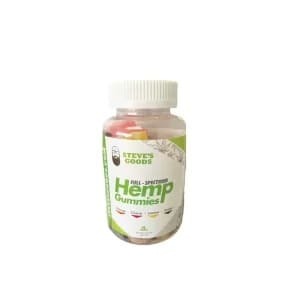
I've been making CBD gummies by hand in Louisville, Kentucky since 2016. Eight years in this industry means I've watched it go from the Wild West to... well, a slightly less wild West. And in that time, I've seen every shortcut in the book.
When people ask me "why is CBD so expensive?" — or more specifically, why my gummies cost more than some random brand they found online — I don't get defensive. I get honest. Because the real question isn't why quality CBD costs what it does. The question is: what are the cheap brands leaving out?
The Shortcuts Nobody Talks About
Let me walk you through what happens when a company decides to win on price instead of quality. These aren't hypotheticals — I've seen all of these firsthand.
Corn Syrup Instead of Real Sweeteners
The number one way to cut costs on gummies? Cheap sweeteners. High fructose corn syrup is dirt cheap, shelf-stable, and most consumers won't know the difference by looking at the package. But your body knows the difference. At Steve's Goods, we use natural tapioca syrup — it costs more, but it's a cleaner ingredient that I'm proud to put my name on.
Gelatin Instead of Plant-Based Alternatives
Traditional gummies use gelatin, which is cheap and easy to work with. The problem? It's animal-derived, which excludes a lot of customers. We use vegan pectin because I believe everyone deserves access to quality CBD products, regardless of dietary choices. Pectin is more expensive and honestly more finicky to work with — but it's the right call.
Skipping Third-Party Testing
Here's a dirty secret: third-party lab testing is completely voluntary for most CBD companies. There's no federal requirement forcing anyone to verify what's actually in their products. A full panel of lab tests — checking for potency, pesticides, heavy metals, residual solvents, and microbial contamination — costs real money. Every single batch.
Some companies test once, get a good result, and slap that COA (Certificate of Analysis) on every product they make for the next three years. Others don't test at all. They're gambling with your trust to save a few bucks per unit.
Every batch we make at Steve's Goods goes through independent third-party testing. Every. Single. One. Because I want to know exactly what's in there — and so should you.
Mislabeled Potency
This one really gets to me. Studies have shown that a significant percentage of CBD products on the market don't contain what they claim. Some have less CBD than advertised. Some have none at all. A few have way more — which might sound like a bonus until you realize it means they have no quality control.
When you buy a 25mg gummy from me, you're getting 25mg. Period. That consistency comes from rigorous processes, proper equipment, and yes — those third-party tests I keep mentioning.
Synthetic Cannabinoids
The latest cost-cutting trend is using synthetic or semi-synthetic cannabinoids instead of naturally-derived hemp extracts. These lab-created compounds are cheaper to produce at scale and can mimic natural cannabinoids — but they're not the same thing. The long-term effects aren't well studied, and frankly, I don't want to be the guinea pig. I use real hemp extract because that's what I'd want to put in my own body.
What Quality Actually Costs
So when you're comparing cheap vs quality CBD, here's what you're actually paying for with a company like mine:
- Premium ingredients — Natural tapioca syrup, vegan pectin, natural flavors, distilled water (not tap)
- Real hemp extract — Naturally derived, not synthetic
- Batch-by-batch total-THC COA — full-panel testing per production lot, available on request
- Proper facility maintenance — Our Louisville production facility follows strict quality standards
- Compliance — Staying current with state and federal regulations isn't free
- Honest labeling — What we say is in there is actually in there
None of this is glamorous. You won't see it in flashy Instagram ads. But it's the foundation that separates companies you can trust from companies that are just trying to make a quick buck before the next regulatory crackdown.
The Real Cost of Cheap
Here's what I've learned after eight years: cheap CBD isn't actually cheap. You're either paying upfront for quality, or you're paying later in other ways — products that don't work, ingredients you wouldn't want in your body if you knew they were there, or simply wasted money on something that isn't what it claims to be.
I'm not saying every expensive CBD product is automatically good, or that every affordable option is garbage. I'm saying you should know what you're buying. Ask questions. Look for COAs. Check ingredients. Understand what corners a company might be cutting to hit that price point.
I built Steve's Goods on the principle that I'd only sell products I'd give to my own family. That means natural tapioca syrup instead of corn syrup. Vegan pectin instead of gelatin. Third-party testing on every batch. Hand-crafted production in our Louisville, Kentucky facility instead of overseas mass production.
Does it cost more? Yes. Is it worth it? I think so. But don't take my word for it — learn more about why we do things differently and decide for yourself.
Ready to Try Real Quality?
If you're tired of guessing what's actually in your CBD products, I'd love to earn your trust. Browse our full line of CBD gummies — every one made by hand, tested by third parties, and backed by my name. Because at the end of the day, my reputation is on the line with every single gummy that leaves our facility.
Got questions about our ingredients or testing? Reach out anytime — I'm always happy to talk shop.
From the Steve’s Goods catalog: what we actually put in our gummies, and bulk and private-label gummy manufacturing.